My Lawn Care System
Quick, Easy and Effective
Using my unique fertilisers, there is little work and no specialist knowledge required to maintain croquet lawns to a high standard. Applying fertiliser takes less than 2 hours a year per croquet lawn. Controlling moss, weeds and worms will take another two or three hours. There are no "chemicals" or PPPs that require pesticide Certification or Registration.
I have devised programmes specifically for croquet lawns, these include Summer and Winter Programmes. If you don't have a broadcast sprayer, the granular programmes will the be best option. For clubs that do have a broadcast sprayer (spray width 4 yards), liquid programmes will be the choice. Everything you need to know about the programmes is provided in my Shop including application quantities, dilutions and application calendars.
If you have any questions, I'm readily available to offer guidance and support, and can conduct on-site video calls if necessary. This approach makes it suitable for club members, gardeners or contractors to do the manual work and puts the club in overall control with my guidance available if required.
Low Cost Synthetic Formula
This fertiliser is suitable for clubs that have a very tight budget. It will ensure a good playing surface through the playing season. If lawn speed is important, scarifying may be required as synthetic fertilisers do not reduce or prevent thatch build-up.
Mainstay Organic Formula
This organic based granular fertiliser incorporates a source of nitrogen, potassium, trace elements and significant levels of amino acids. It provides not only the nutrition for growth and root development, but also an organic bio-stimulant effect to boost the plant’s ability to cope with stressful conditions including drought and heat.
The organics also stimulate beneficial micro-organisms in the soil generating further benefits for soil structure and nutrient availability. Past experience shows that, in most soils, the biological nature of this product prevents thatch build-up thus eliminating the need to scarify.
Thatch-Busting Formula
The unique Biogran fertiliser costs a bit more but the special biological substrate does the heavy lifting. It reduces thatch through bacterial action by around 30% per annum, eliminating the need to scarify and producing superb fast croquet lawns with little effort. The system is proven over a thirteen year period at croquet clubs across the country.
Slow release
The slow release is accomplished by incorporating longer, more complex molecules which take bacteria longer to break down. This method does not use a polymer coating so does not pollute the soil with microplastics.
Granular Programmes
Granular fertilisers are applied using a spreader in April, June and August. Spreading takes about 10 minutes per lawn. The programmes are designed specifically for croquet lawns even down to the 15kg bags. One bag for a half lawn, two for a full size lawn and three for a bowling green size. The bags are easy to handle and store.
Fertilisers working with nature
The granular fertilisers dissipate into the root zone where they are converted by bacteria at a molecular level into usable nutrition for the roots to absorb. In cool dry weather, there is little plant demand, the bacteria are less active so convert less. When growing conditions improve, bacteria become active and start converting the fertiliser again thus providing nutrition for the grass in sympathy with plant demand.
Liquid Programmes
The Liquid Programmes use Biofeed which is sprayed monthly from May to August. Biogran granular fertiliser is applied in Spring and Autumn - the bacteria and mychorrhizal fungi cannot be supplied in liquid form. Wetting Agent and Soluble iron can be mixed with the Biofeed to control Dry Patch, moss and fungal disease such as Dollar Spot and Red Thread in the summer. Liquid Winter feeds are very low cost and can also be combined with Soluble Iron to control moss and winter fungal diseases such as Fusarium.
Moss
Moss is controlled by spraying Soluble Iron, available in my shop. The B20 knapsack sprayer featured in my online shop (£32) is ideal. It takes 4 minutes to spray 100 sq metres at a cost of about 50p for the iron.
Within a few hours, the moss will turn black. The dead moss can be raked out or just left to let the grass grow through.
Weeds
Use Weedol for Lawns which is available from Garden Centres. If you have a few weeds, a hand applicator is best. Otherwise, buy a bottle of concentrate. This can be diluted in water and applied using the B20 knapsack sprayer mentioned above.
Worms
Worms are controlled using a Soil Conditioner (available in my shop). This is applied using a fertiliser spreader.
Disease
There are several fungal diseases that can affect fine turf. They are all controlled with Soluble Iron in the same way as moss.
Dry Patch
This is easily cured by spraying a liquid curative, available in my shop.
Seed
I supply Origin R8 Ultrafine Seed as used at Surbiton and many other clubs.
Mowing
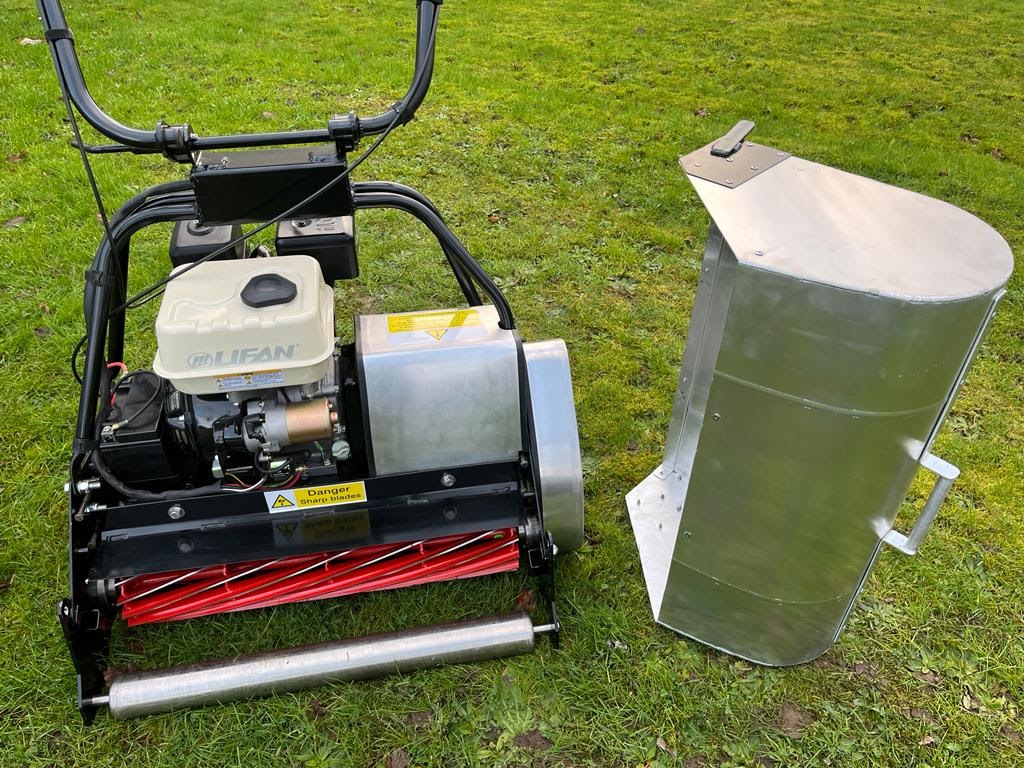
The summer cut height is 5mm to 7mm. In winter increase the height to 8 to 10 mm. Mowing every few weeks in the winter is important. It helps to thicken the sward, encourages a dwarf habit and discourages coarse grasses.
No Scarifying
The Thatch-Busting Formula will reduce thatch and the Mainstay Organic fertiliser will prevent the build up of thatch on most soils thus eliminating the need to scarify. The Low Cost Synthetic Formula, in common with all synthetic fertilisers will not prevent the build up of thatch so scarifying my be required.
I have devised programmes specifically for croquet lawns, these include Summer and Winter Programmes. If you don't have a broadcast sprayer, the granular programmes will the be best option. For clubs that do have a broadcast sprayer (spray width 4 yards), liquid programmes will be the choice. Everything you need to know about the programmes is provided in my Shop including application quantities, dilutions and application calendars.
If you have any questions, I'm readily available to offer guidance and support, and can conduct on-site video calls if necessary. This approach makes it suitable for club members, gardeners or contractors to do the manual work and puts the club in overall control with my guidance available if required.
Low Cost Synthetic Formula
This fertiliser is suitable for clubs that have a very tight budget. It will ensure a good playing surface through the playing season. If lawn speed is important, scarifying may be required as synthetic fertilisers do not reduce or prevent thatch build-up.
Mainstay Organic Formula
This organic based granular fertiliser incorporates a source of nitrogen, potassium, trace elements and significant levels of amino acids. It provides not only the nutrition for growth and root development, but also an organic bio-stimulant effect to boost the plant’s ability to cope with stressful conditions including drought and heat.
The organics also stimulate beneficial micro-organisms in the soil generating further benefits for soil structure and nutrient availability. Past experience shows that, in most soils, the biological nature of this product prevents thatch build-up thus eliminating the need to scarify.
Thatch-Busting Formula
The unique Biogran fertiliser costs a bit more but the special biological substrate does the heavy lifting. It reduces thatch through bacterial action by around 30% per annum, eliminating the need to scarify and producing superb fast croquet lawns with little effort. The system is proven over a thirteen year period at croquet clubs across the country.
Slow release
The slow release is accomplished by incorporating longer, more complex molecules which take bacteria longer to break down. This method does not use a polymer coating so does not pollute the soil with microplastics.
Granular Programmes
Granular fertilisers are applied using a spreader in April, June and August. Spreading takes about 10 minutes per lawn. The programmes are designed specifically for croquet lawns even down to the 15kg bags. One bag for a half lawn, two for a full size lawn and three for a bowling green size. The bags are easy to handle and store.
Fertilisers working with nature
The granular fertilisers dissipate into the root zone where they are converted by bacteria at a molecular level into usable nutrition for the roots to absorb. In cool dry weather, there is little plant demand, the bacteria are less active so convert less. When growing conditions improve, bacteria become active and start converting the fertiliser again thus providing nutrition for the grass in sympathy with plant demand.
Liquid Programmes
The Liquid Programmes use Biofeed which is sprayed monthly from May to August. Biogran granular fertiliser is applied in Spring and Autumn - the bacteria and mychorrhizal fungi cannot be supplied in liquid form. Wetting Agent and Soluble iron can be mixed with the Biofeed to control Dry Patch, moss and fungal disease such as Dollar Spot and Red Thread in the summer. Liquid Winter feeds are very low cost and can also be combined with Soluble Iron to control moss and winter fungal diseases such as Fusarium.
Moss
Moss is controlled by spraying Soluble Iron, available in my shop. The B20 knapsack sprayer featured in my online shop (£32) is ideal. It takes 4 minutes to spray 100 sq metres at a cost of about 50p for the iron.
Within a few hours, the moss will turn black. The dead moss can be raked out or just left to let the grass grow through.
Weeds
Use Weedol for Lawns which is available from Garden Centres. If you have a few weeds, a hand applicator is best. Otherwise, buy a bottle of concentrate. This can be diluted in water and applied using the B20 knapsack sprayer mentioned above.
Worms
Worms are controlled using a Soil Conditioner (available in my shop). This is applied using a fertiliser spreader.
Disease
There are several fungal diseases that can affect fine turf. They are all controlled with Soluble Iron in the same way as moss.
Dry Patch
This is easily cured by spraying a liquid curative, available in my shop.
Seed
I supply Origin R8 Ultrafine Seed as used at Surbiton and many other clubs.
Mowing
The summer cut height is 5mm to 7mm. In winter increase the height to 8 to 10 mm. Mowing every few weeks in the winter is important. It helps to thicken the sward, encourages a dwarf habit and discourages coarse grasses.
No Scarifying
The Thatch-Busting Formula will reduce thatch and the Mainstay Organic fertiliser will prevent the build up of thatch on most soils thus eliminating the need to scarify. The Low Cost Synthetic Formula, in common with all synthetic fertilisers will not prevent the build up of thatch so scarifying my be required.