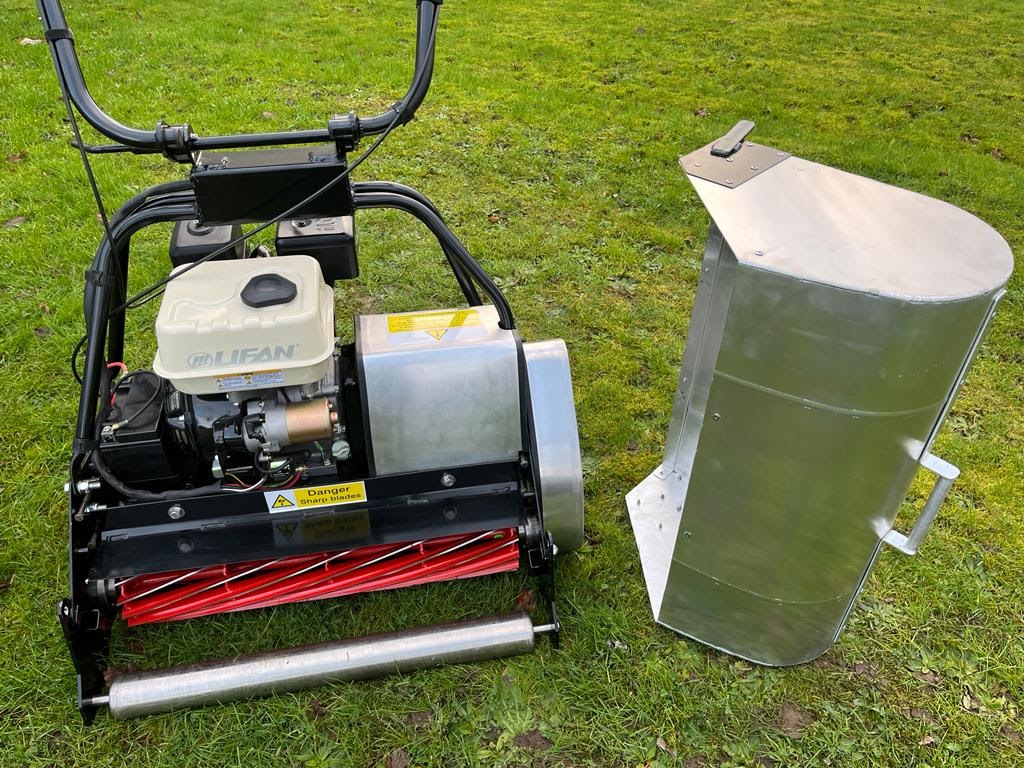
Seeding successfully
When seeding bare areas on croquet lawns, it is important not to disturb the level by creating bumps. This method ensures a good germination and no bumps.
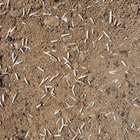
Spread seed
|
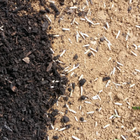
Apply compost
|
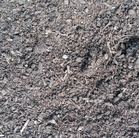
Water daily
|
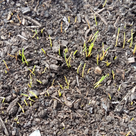
Germination in 5 to 6 days
|
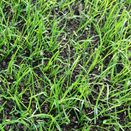
10 to 14 days
|
The first stage is to apply the seed. Then cover this with seeding compost to a depth of around 8mm. That is all you need to do - don't rake or disrupt the existing surface, just sprinkle the seed and cover with seeding compost. The seeding compost won't create bumps because it is totally organic and will disappear in the profile as it is consumed by micro-organisms. If you are seeding during the playing season it is best to mix top dressing with the compost to give it some body so that it stays in place when balls roll over it.
The key to good germination is to keep the seed moist (not wet). The seeding compost that I supply is very unusual because, unlike other composts, it retains water very efficiently. So watering once a day is sufficient to ensure a good germination - twice a day is better but unless the weather is exceptionally hot it probably isn't necessary. In growing weather you can expect germination in 5 to 6 days and you will probably have to start trimming the grass after 10 to 14 days.
You can seed directly on top of dead moss or, if you prefer, rake the moss out then seed. Seeded areas can be sprayed with Soluble Iron, it won't affect germination or establishment of seedlings.
When to seed?
For good germination, the soil temperature should be at least 12 degrees for Fescues. Ryegrass can germinate at a lower temperature of 9 degrees. It therefore depends where you are and how the weather performs. You can find soil temperature information for your location here www.soiltemperature.app
Eradicating coarse grass. Kill off patches of coarse grass using Round Up Total weedkiller. You can spread seed into the treated area immediately because Round Up doesn't kill seed. Then cover with seeding compost to a depth of around 8mm This is a quick and simple way of controlling coarse grass without disrupting the playing surface.
What you need
R8 Ultra-Fine Rye & Fescue seed which contains 70% perennial ryegrass and 30% fescue. This gives a tighter sward because the creeping fescue fills in any gaps.
These cultivars are hard wearing, recover very well from drought, can be mowed as low as 5 mm producing a fast playing surface and generate less thatch than other grasses. They germinate strongly at temperatures down to 9 to 12 degrees C.
The seeding compost is graded to 4mm and must be kept dry before use. To aid germination and establishment of seedlings an organic fertiliser should be used. The Croquet Lawn Spring or Autumn organic fertiliser that I supply is safe for seeding applications and should be applied before covering the seed with compost.
The products
R8 Ultra-Fine Rye & Fescues are supplied in 5 kg or 20kg bags but I can also supply Ultrafine 60 in 5kg bags. Available in my shop HERE
Seeding Compost: Supplied in 40 litre bags (min 6 bags) or in bulk bags of 730, 1000 or 1500 litres. A 40 litre bag covers 5 sqm. Supplied on a pallet. Available in my shop HERE
Fertiliser: Croquet Lawn Spring or Autumn organic fertiliser is included in the annual programme that I supply.
The key to good germination is to keep the seed moist (not wet). The seeding compost that I supply is very unusual because, unlike other composts, it retains water very efficiently. So watering once a day is sufficient to ensure a good germination - twice a day is better but unless the weather is exceptionally hot it probably isn't necessary. In growing weather you can expect germination in 5 to 6 days and you will probably have to start trimming the grass after 10 to 14 days.
You can seed directly on top of dead moss or, if you prefer, rake the moss out then seed. Seeded areas can be sprayed with Soluble Iron, it won't affect germination or establishment of seedlings.
When to seed?
For good germination, the soil temperature should be at least 12 degrees for Fescues. Ryegrass can germinate at a lower temperature of 9 degrees. It therefore depends where you are and how the weather performs. You can find soil temperature information for your location here www.soiltemperature.app
Eradicating coarse grass. Kill off patches of coarse grass using Round Up Total weedkiller. You can spread seed into the treated area immediately because Round Up doesn't kill seed. Then cover with seeding compost to a depth of around 8mm This is a quick and simple way of controlling coarse grass without disrupting the playing surface.
What you need
R8 Ultra-Fine Rye & Fescue seed which contains 70% perennial ryegrass and 30% fescue. This gives a tighter sward because the creeping fescue fills in any gaps.
These cultivars are hard wearing, recover very well from drought, can be mowed as low as 5 mm producing a fast playing surface and generate less thatch than other grasses. They germinate strongly at temperatures down to 9 to 12 degrees C.
The seeding compost is graded to 4mm and must be kept dry before use. To aid germination and establishment of seedlings an organic fertiliser should be used. The Croquet Lawn Spring or Autumn organic fertiliser that I supply is safe for seeding applications and should be applied before covering the seed with compost.
The products
R8 Ultra-Fine Rye & Fescues are supplied in 5 kg or 20kg bags but I can also supply Ultrafine 60 in 5kg bags. Available in my shop HERE
Seeding Compost: Supplied in 40 litre bags (min 6 bags) or in bulk bags of 730, 1000 or 1500 litres. A 40 litre bag covers 5 sqm. Supplied on a pallet. Available in my shop HERE
Fertiliser: Croquet Lawn Spring or Autumn organic fertiliser is included in the annual programme that I supply.